About us
A roastery with one working day a week
First Crack° is a small roastery. We buy a few lots at a time, roast them on Tuesdays and send out everything that came off the drum within the same week. This page explains why it works this way.
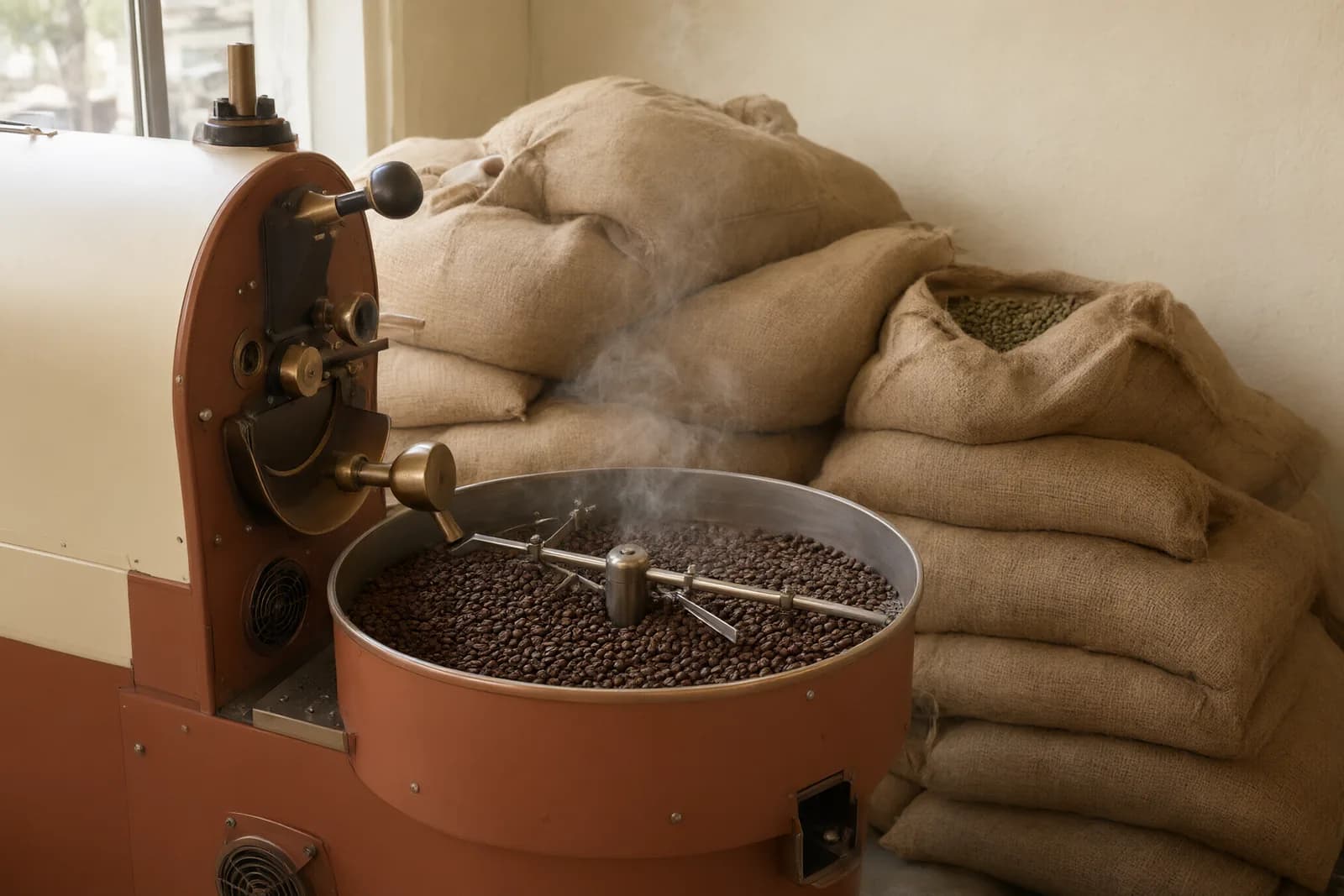
Why Tuesday
Coffee is a fresh product, and it keeps changing after roasting: for the first few days it releases carbon dioxide, and the cup tastes sharp and hollow. Filter coffee opens up after about a week and stays at its best for another three.
One fixed roasting day lets us time that window. Beans roasted on Tuesday are packed on Wednesday, reach you by the weekend and are ready to brew the following week — right at their best.
How we buy
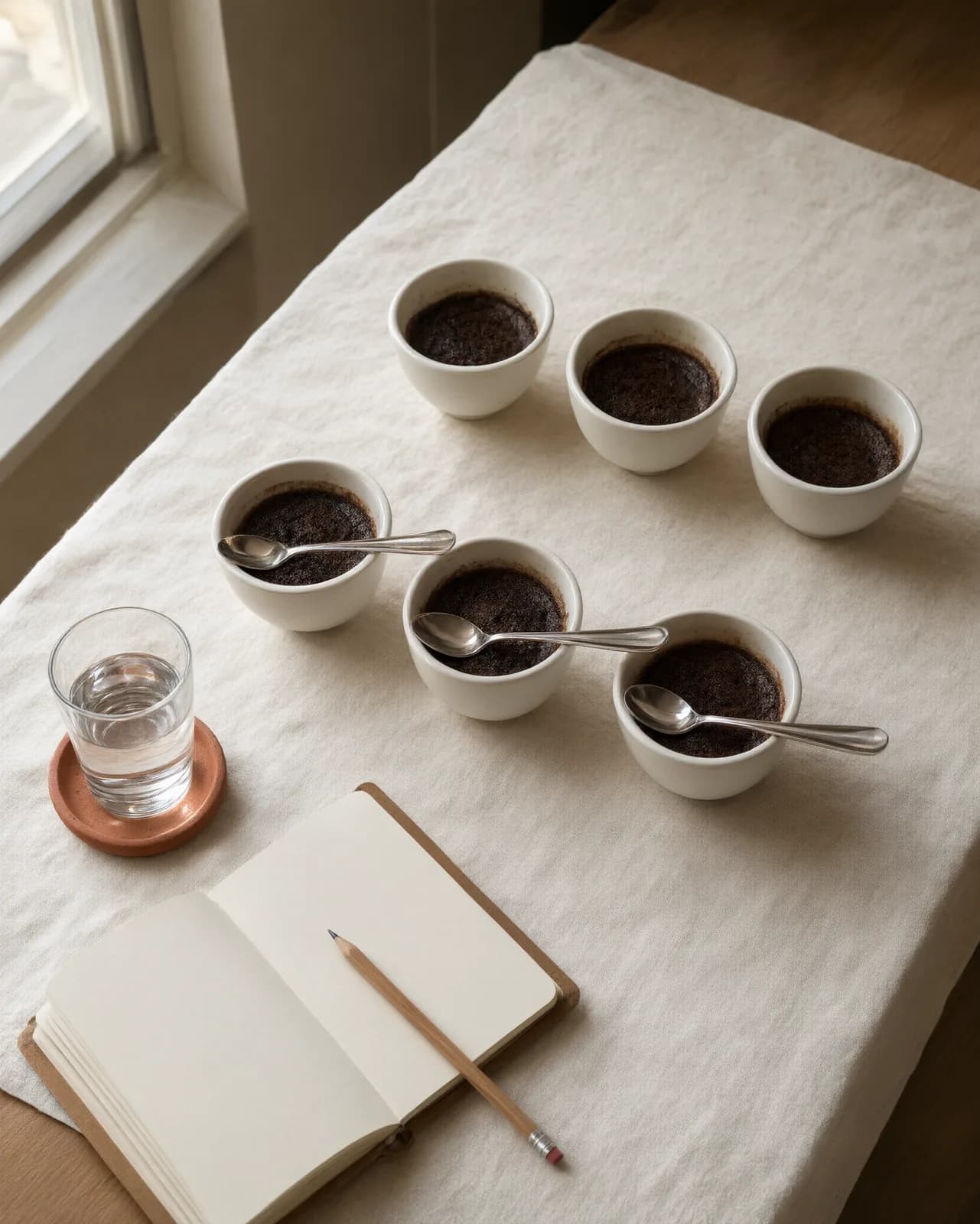
Two or three sacks per lot, from importers who name the farm, the washing station and the harvest year. We cup every sample before buying and turn down more than we take.
When a lot runs out, it is gone. We don’t quietly replace it with something similar under the same name — a new lot gets a new label and a new description.
How we roast
One drum, one roasting day. Profiles are written for filter first: light enough to keep the origin in the cup, developed enough not to taste of grass. The house espresso is the only coffee we take a shade darker.
Every batch is cupped the next morning. If a lot tastes flat, it gets a new profile the following Tuesday — and the batch number on the bag tells you which week it came from.
Freshness and shipping
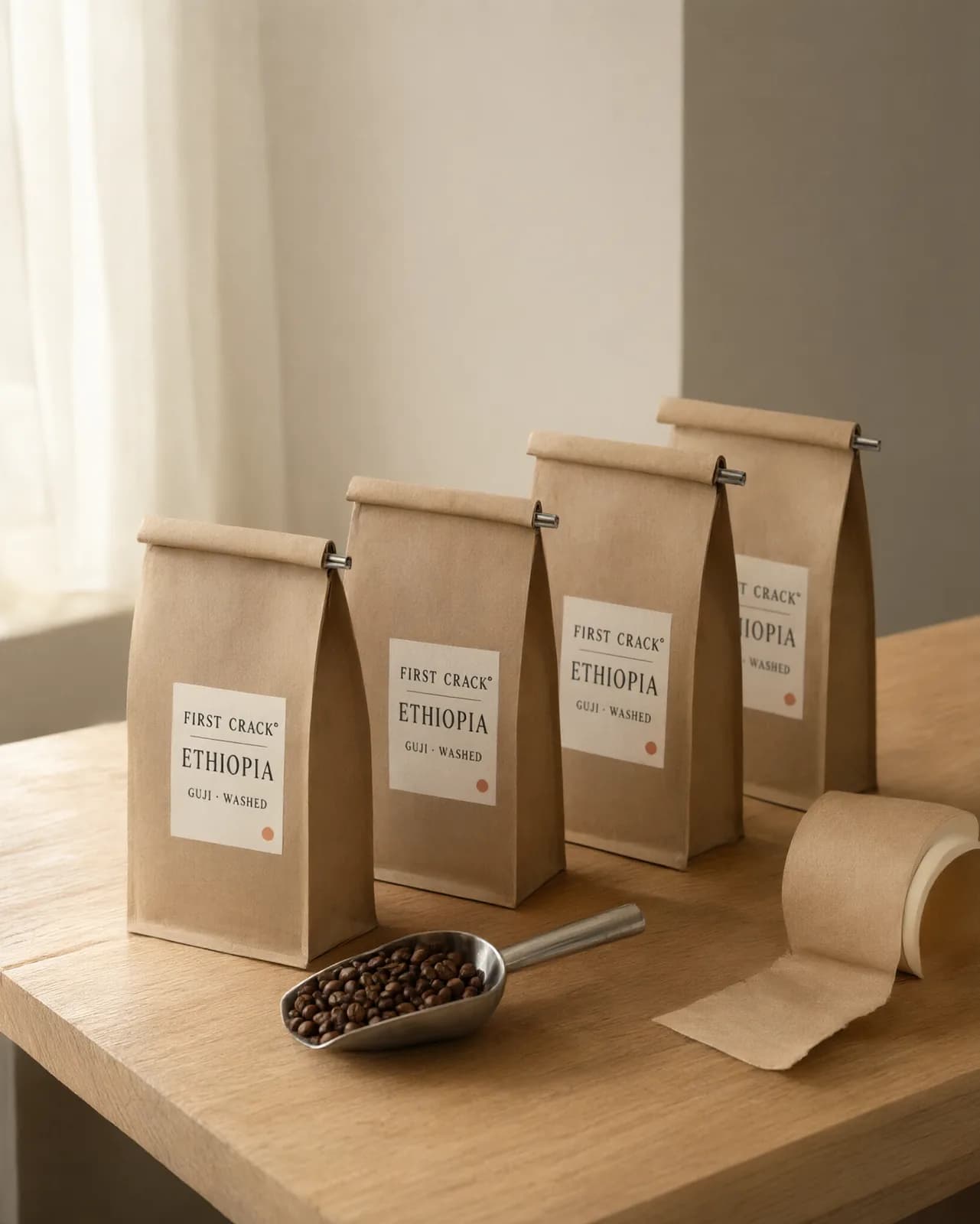
Bags are filled by hand the day after roasting, dated and sealed with a one-way valve. Nothing waits in a warehouse for demand: what we roast this week leaves this week.
On every bag you will find the roast date and the batch number, so you always know how old your coffee is.
In numbers
- 1
- roasting day a week
- 2–3
- sacks of green coffee per lot
- 7–30
- days after roasting — the best window for filter
Questions we get asked
Which grind should I choose?
If you have a grinder, take whole beans: ground coffee loses aroma within a day. If you don’t, pick the grind for your brewer at checkout — filter for pour-over and drip bags, espresso for a machine, moka for a stovetop pot, coarse for a French press.
Why shouldn’t I brew it straight after roasting?
Freshly roasted beans are still releasing carbon dioxide, and the gas gets in the way of extraction: the cup tastes sour and thin. Give filter coffee five to seven days and espresso a little longer.
How long does a bag keep?
It tastes best within a month of the roast date. Keep the bag closed, away from light and heat. The fridge doesn’t help: beans pick up moisture and smells there.
When will my order ship?
We roast on Tuesday, pack on Wednesday and hand everything to the courier the same day. An order placed by Monday evening goes out with this week’s roast.
Is this a real shop?
No, it’s a portfolio demo. Payment goes through a test bank and orders are never shipped. Everything else — the cart, the emails, the admin panel — works for real.